
One of the arguments raised by opponents of the Alternative Vote is that it allows the candidate with the second or even the third largest number of first preference votes to win the seat. This is a clinching argument against AV and in favour of First Past The Post only if you think that second and subsequent preferences ought not to be counted and that only first preferences really matter, i.e. you are making a basic assumption that lies at the foundation of the case for FPTP in the first place. People who think that second and subsequent preferences ought to count should be relaxed about the possibility that first preference votes alone might not be decisive.
One can go further, in fact, and look at the maths. Fullfact.org reports on research in Australia, where AV is used, which found that in 3,354 constituency contests since 1949, only seven, or 0.02 per cent, saw the third placed candidate on the first round finally win.
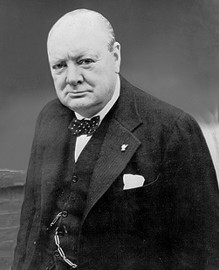
Compare this with the experience of FPTP in the UK. The 1951 general election saw Clement Attlee’s Labour party win 295 seats on the strength of 13,948,385 votes and the Conservatives, led by Winston Churchill, get 321 seats (and a working majority in the House of Commons) with only 13,717,850 votes, that is to say 230,535 votes fewer.
In the context of 45 general elections since the Great Reform Act of 1832, this means that the second-placed party, rather than the first-placed party, has formed the government on 2.2 per cent of occasions. So much for the claim that FPTP means that the first-placed winner always wins.